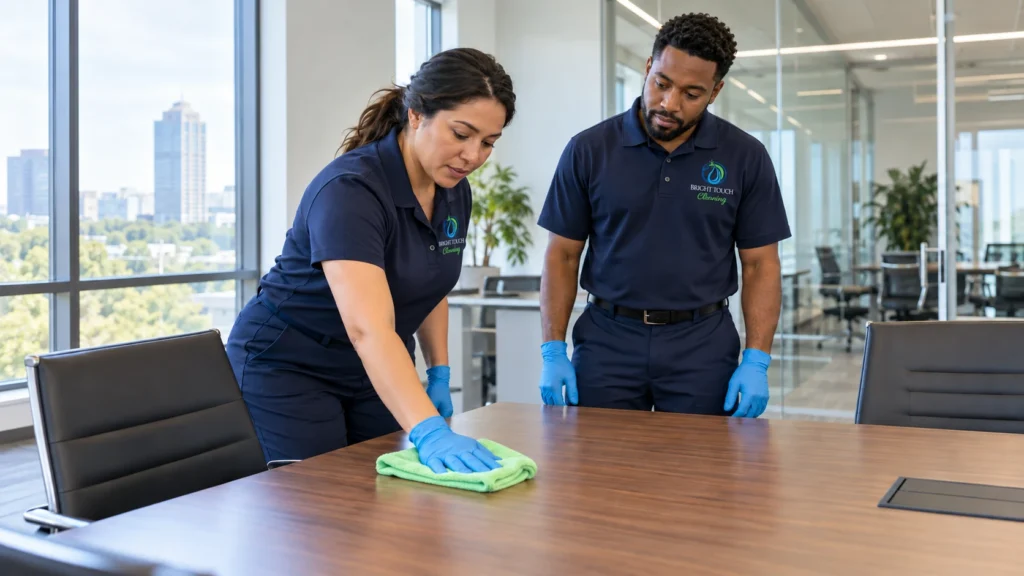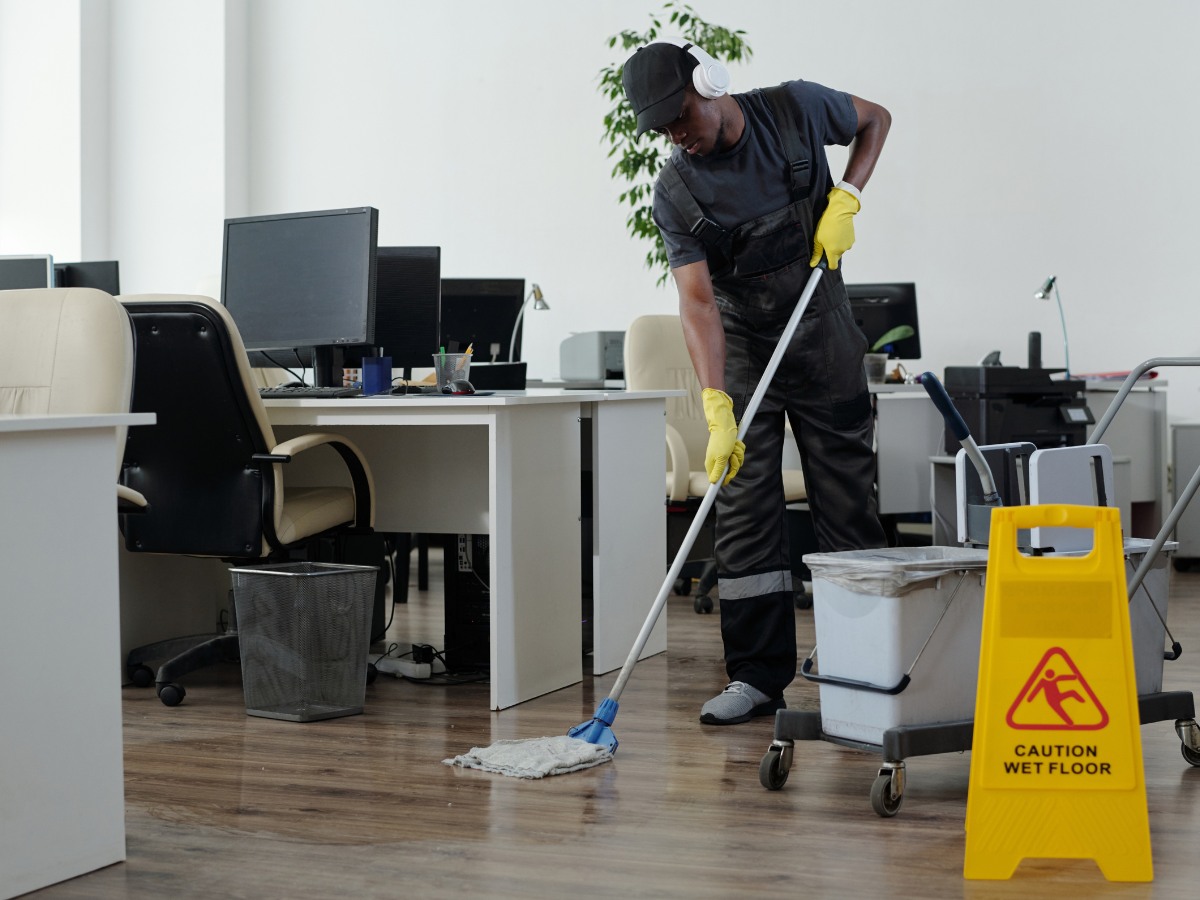

Anyone can promise a cleaner workplace. The harder question is whether a cleaning company can deliver consistent results week after week without missed tasks, scheduling headaches, or standards gradually slipping once the contract is signed.
Learning how to choose a commercial cleaning company in Marietta means looking beyond an attractive quote or long list of services.
Reliability, insurance coverage, employee screening and training, quality-control practices, communication, scheduling flexibility, and experience with your type of facility can all reveal how well a provider is equipped to handle the job.
The right cleaning partner should make facility maintenance easier, not give your team another responsibility to manage. Knowing which qualifications to verify and questions to ask can help you narrow the options and choose a company with greater confidence.
What to Look for When Choosing a Commercial Cleaning Company in Marietta
What Makes a Commercial Cleaning Company Reliable?

Reliability in commercial cleaning is less about broad promises and more about whether a company has systems for delivering the same standard of service week after week.
For businesses researching how to choose a commercial cleaning company in Marietta, the most useful questions concern accountability, staffing continuity, quality control, communication, and what happens when normal routines are disrupted.
A dependable provider should be able to explain who performs the work, how cleaners are trained and supervised, and who takes responsibility when something is missed. Those details give facility managers a much clearer picture of day-to-day reliability than marketing claims alone.
Who Is Responsible for the Cleaning Staff?
Start by asking whether cleaners are company employees, subcontractors, or a combination of both.
The employment model itself does not guarantee better cleaning, but the provider should be able to explain who handles screening, training, scheduling, supervision, insurance, and performance concerns. Accountability becomes especially important when several cleaners rotate through a facility.
Commercial cleaning companies should have a clear management structure so facility managers know whom to contact rather than having to resolve staffing or service problems directly with individual cleaners.
Questions about staff screening, training, and supervision should be answered before a contract is signed. Comparing the same information across providers makes it easier to see how responsibility is assigned when staffing or service issues arise.
How Does the Company Maintain Consistent Cleaning Standards?
Ask how the provider makes sure the agreed scope is completed consistently. Depending on the company, quality control may involve checklists, supervisor reviews, inspections, account management, customer feedback, or a combination of methods.
The important point is not whether every visit receives a formal inspection. A reliable system should identify recurring problems, communicate corrections to cleaners, and keep expectations consistent even when different team members service the building.
A clearly defined commercial cleaning scope also gives both sides a practical standard for evaluating the work. Areas, tasks, frequencies, and exclusions should be documented well enough that quality can be judged against agreed expectations rather than vague assumptions.
What Happens When a Regular Cleaner Is Absent?
Staffing continuity is easy to overlook until someone calls out sick, takes vacation, or leaves the company. Ask whether the provider has trained replacement staff available and how service is handled when the regular cleaner or team cannot attend.
Do not assume that backup staffing means service can never be delayed. Instead, ask what the normal procedure is, how substitutions are arranged, and whether replacement cleaners receive the facility’s existing instructions, access procedures, and cleaning priorities.
How Are Service Problems Escalated?
Reliable commercial cleaning requires a communication process as much as a cleaning process. Facility managers should know who handles missed tasks, repeated quality issues, supply concerns, access problems, and changes to the cleaning schedule.
Ask whether your account has a designated contact and how routine concerns are handled. You should also know when an issue is escalated to a supervisor or manager rather than repeatedly passed between cleaners.
What Should You Verify Before Signing a Contract?
When deciding how to choose a commercial cleaning company in Marietta, look for evidence of a workable system rather than relying on isolated features such as uniforms or company size. A provider should be able to give clear answers about:
- who employs and supervises the cleaners
- how staff are screened and trained
- how the cleaning scope is communicated
- how quality is monitored
- how absences and substitutions are handled
- who manages service concerns
- how recurring problems are documented and corrected
- how changes to the facility or cleaning schedule are communicated
No single item proves that a commercial cleaner will be dependable. Taken together, however, these questions help reveal whether the company has enough structure to maintain service without requiring the facility manager to supervise the cleaning operation personally.
How Do I Match Cleaning Services to My Facility?
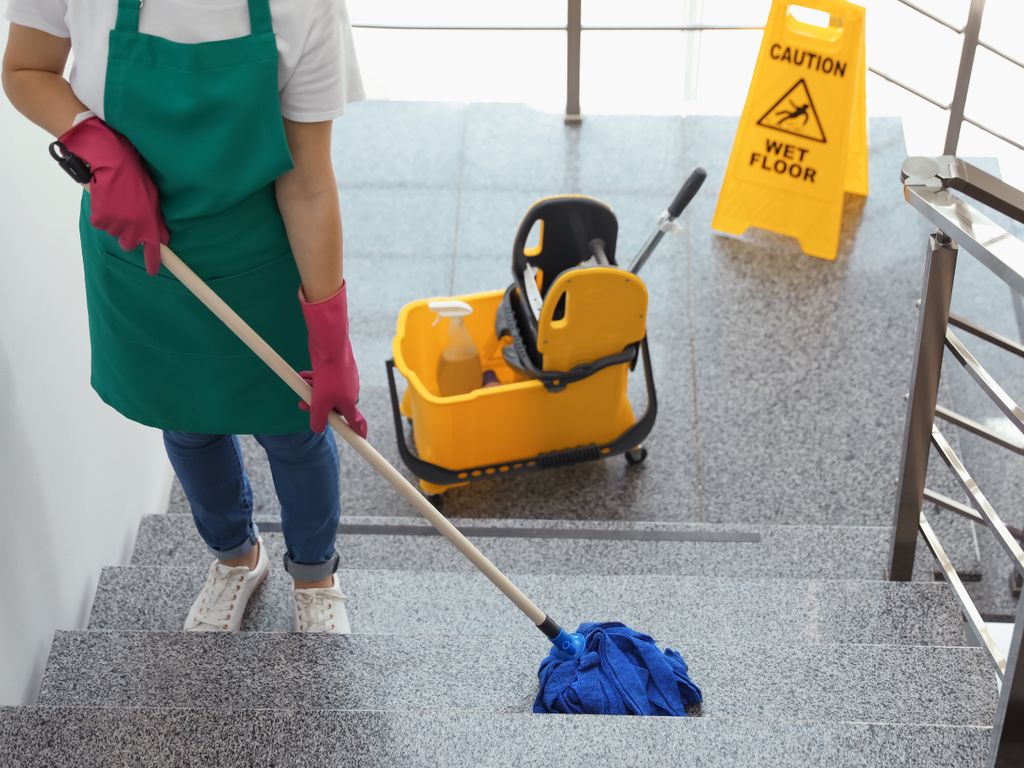
Choosing the right cleaning plan starts with understanding how the building is actually used. Square footage matters, but traffic levels, operating hours, floor types, shared spaces, customer-facing areas, and the type of work performed inside the facility can have a much greater effect on what needs attention and how often.
For anyone researching how to choose a commercial cleaning company in Marietta, this is an important distinction. A cleaning provider should be able to build the scope around the facility rather than applying the same checklist and schedule to every business.
Which Areas of the Facility Need the Most Attention?
Walk through the property by function rather than treating every square foot equally. Restrooms, entrances, break rooms, reception areas, elevators, and other high-traffic spaces usually need more frequent attention than storage rooms, private offices, or areas that see limited use.
Look at when and how each space becomes dirty as well. A lobby may need ongoing spot cleaning during business hours, while conference rooms might only require attention after periods of heavy use.
This helps determine where routine janitorial work is enough and where a different level of service makes sense.
Which Cleaning Services Does the Building Actually Need?
Instead of starting with a long menu of services, connect each service to a specific problem in the facility. Routine janitorial cleaning may cover everyday needs such as trash removal, restroom cleaning, dusting, vacuuming, mopping, and common-area maintenance.
Some facilities need additional support beyond that basic schedule. Depending on the property, that may include:
- day porter service for spills, restocking, and daytime upkeep
- periodic carpet or hard-floor care
- more frequent restroom servicing
- detailed cleaning of high-touch surfaces
- seasonal or periodic deep cleaning
- additional cleaning in heavily used entrances and common areas
The goal is not to purchase every available service. It is to identify what needs routine attention, what requires occasional specialist work, and what does not need to be included at all.
How Should the Building Type Affect the Cleaning Plan?
Different commercial facility types create different cleaning priorities. An office with mostly desks and meeting rooms presents a different workload from a multi-tenant property with shared lobbies, elevators, restrooms, and common areas.
The same principle applies within a single building. A customer-facing reception area may need to be maintained more frequently than administrative offices, while a heavily used break room may require a different schedule from an occasional meeting space.
Avoid assuming that a particular industry automatically requires a fixed cleaning package. The better approach is to evaluate actual occupancy, traffic, surfaces, building rules, and operational needs before deciding what belongs in the scope.
Should Every Area Be Cleaned at the Same Frequency?
Usually not. Cleaning every room on the same schedule can result in heavily used areas receiving too little attention while low-use spaces are serviced more often than necessary.
A more practical plan assigns frequency according to use. Restrooms and entrances may need service every visit, for example, while some offices, storage spaces, or low-traffic rooms may need less frequent attention.
The exact schedule should reflect conditions in the building rather than a generic frequency chart.
What Should You Discuss During the Facility Walkthrough?
Use the walkthrough to identify priorities that may not be obvious from square footage alone. Point out high-traffic zones, sensitive areas, restricted rooms, floor types, supply-storage locations, access requirements, and any spaces that become difficult to maintain during particular parts of the day.
This is also the time to separate recurring tasks from periodic work. If carpet extraction, floor refinishing, detailed glass cleaning, or another specialized task is only needed occasionally, it should not be confused with the routine cleaning scope.
Understanding how to choose a commercial cleaning company in Marietta means looking beyond whether a provider offers a long list of services.
The better question is whether the proposed plan matches how your facility functions, concentrates effort where it is needed most, and avoids paying for work that adds little practical value.
What Questions Should I Ask Before Hiring a Commercial Cleaning Company?

Before signing a commercial cleaning agreement, facility managers should move beyond general promises such as “reliable service” or “custom cleaning.”
The most useful questions uncover exactly what the company will do, how the relationship will be managed, and what happens when your facility’s needs change.
If you are researching how to choose a commercial cleaning company in Marietta, use the proposal and walkthrough to test how clearly each provider defines its responsibilities. A detailed answer is generally more useful than a broad assurance that everything will be handled.
What Exactly Is Included in the Cleaning Scope?
Ask for a written breakdown of the rooms, tasks, and service frequencies included in the proposal. Restrooms, break rooms, entrances, offices, conference rooms, floors, and shared spaces may require different schedules, so a single description such as “general janitorial service” is not specific enough for meaningful comparison.
Pay attention to exclusions as well. Floor refinishing, carpet extraction, interior glass, detailed cleaning, consumable supplies, or other periodic work may be billed separately, and those distinctions should be clear before the contract begins.
How Was the Estimate Calculated?
A commercial cleaning estimate should reflect more than square footage alone. Ask how occupancy, traffic, restroom count, flooring, cleaning frequency, building access, operating hours, and the current condition of the facility affected the proposed price.
Also ask what circumstances could change that price later. If adding employees, extending business hours, opening another floor, or changing the cleaning frequency would require a new estimate, you should know how those adjustments are handled.
Who Will Manage the Account?
Facility managers should know whom to contact for schedule changes, service concerns, supply questions, or changes to the cleaning scope. Ask whether there is a designated account contact and how routine issues are communicated to the cleaning team.
The communication process matters especially when several locations, shifts, or cleaning crews are involved. A clear escalation path can prevent minor problems from turning into repeated service issues.
What Happens When the Facility’s Needs Change?
Commercial spaces do not always operate the same way year-round. Staffing changes, renovations, seasonal traffic, special events, tenant turnover, or changes in operating hours can all alter cleaning requirements.
Ask how easily the service scope can be adjusted and whether changes require a new agreement or pricing review. A useful cleaning plan should be specific enough to set expectations while still allowing the facility to respond to legitimate operational changes.
How Are Missed Tasks or Service Problems Handled?
Find out how concerns are reported, who reviews them, and what happens when part of the agreed scope is missed. You should also ask how recurring problems are documented so the same issue does not need to be reported after every visit.
Avoid relying on vague promises that the company will “take care of it.” A defined correction and escalation process gives both sides a clearer framework for resolving problems.
What Contract Terms Should I Review Carefully?
Before signing, review the service frequency, pricing, payment terms, cancellation requirements, renewal provisions, notice periods, included services, exclusions, and any conditions that may result in additional charges.
If something discussed during the walkthrough is important to your operation, make sure it appears in the written agreement rather than remaining a verbal understanding.
This is an important part of learning how to choose a commercial cleaning company in Marietta because price alone does not tell you how workable the relationship will be.
The strongest proposal is one that lets you understand exactly what will be cleaned, how often it will happen, who manages the account, and how changes or problems will be handled after service begins.
How Do I Verify a Commercial Cleaning Company’s Track Record?

A long operating history can be reassuring, but years in business alone do not prove that a cleaning company will be a good fit for your facility.
When researching how to choose a commercial cleaning company in Marietta, look for evidence that the provider has handled similar accounts consistently and knows how to respond when service problems occur.
The goal is to verify patterns rather than rely on a single claim, rating, or testimonial. Reviews, references, account history, and the company’s response to problems can reveal far more about day-to-day performance.
What Should You Look for in Online Reviews?
Read beyond the average star rating and look for repeated themes. Comments about consistency, communication, missed appointments, responsiveness, staff turnover, and problem resolution are usually more useful than short reviews that simply say the service was good or bad.
A company’s customer reviews can also help you identify whether feedback comes from residential clients, commercial facilities, or both. For a business account, give more weight to experiences that resemble your own facility type, service frequency, or operational needs.
Should You Ask for Commercial References?
For a significant or ongoing contract, ask whether the provider can supply references from current or recent commercial clients when appropriate. You do not necessarily need a long list, but speaking with a comparable facility can help you understand how the company performs after the sales process is over.
Useful questions for a reference include how long they have used the service, how often issues occur, how quickly problems are addressed, and whether staffing or service quality has remained reasonably consistent. Focus on the working relationship rather than asking only whether the client is satisfied.
Does Longevity Matter?
Time in business can indicate that a company has experience managing changing staff, customer expectations, and operational challenges.
A newer company may perform very well, while an established provider can still have inconsistent accounts. Compare experience with current reviews, references, communication, and the systems used to manage the work.
What Should You Ask About Client Retention?
Instead of assuming long-term clients equal strong service, ask directly about account continuity. A provider should be able to discuss, at least in general terms, whether it maintains recurring commercial relationships and what typically causes accounts to change or end.
You can also ask how often account managers or cleaning teams change. Frequent turnover is not automatically a problem, but you should understand how the company maintains service continuity when personnel change.
How Can You Tell Whether Problems Are Handled Well?
Every service business eventually encounters complaints, staffing changes, or missed details. What matters is whether the company has a consistent process for acknowledging the issue, correcting it, and preventing the same problem from repeating.
This is an important part of learning how to choose a commercial cleaning company in Marietta because reputation is not just about avoiding complaints.
A stronger track record shows up in how clearly the provider communicates, how consistently it follows through, and whether clients know what to expect when something goes wrong.
What Common Mistakes Should I Avoid When Choosing a Commercial Cleaner?
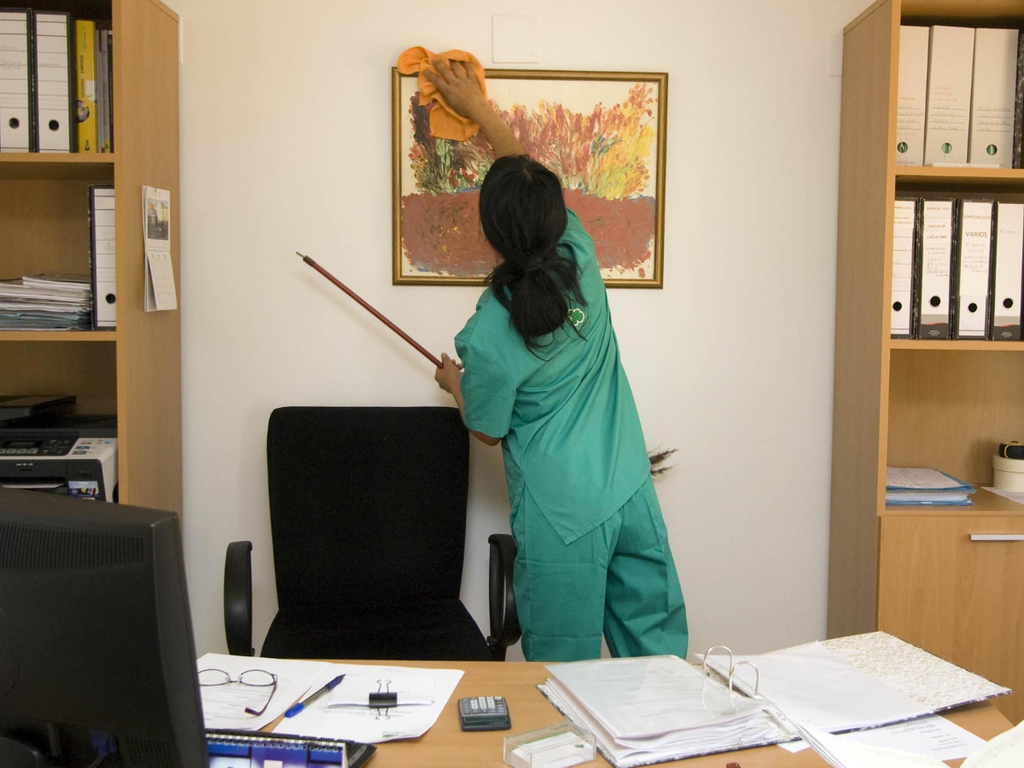
Many problems with commercial cleaning begin before the first visit, when a facility chooses a provider without comparing the details behind the proposal.
If you are researching how to choose a commercial cleaning company in Marietta, avoiding a few common decision-making mistakes can make it easier to compare providers on actual service rather than price or promises alone.
Mistake 1: Choosing Primarily on the Lowest Price
A lower monthly price is difficult to evaluate unless you know exactly what it includes. One proposal may cover restrooms, common areas, routine floor care, and periodic tasks, while another may exclude some of that work or charge for it separately.
Compare the scope, frequency, exclusions, and additional charges alongside the total. A less expensive contract can become poor value if important tasks must regularly be added later.
Mistake 2: Accepting a Vague Scope of Work
Terms such as “general cleaning” or “complete janitorial service” leave too much room for interpretation. The agreement should identify which spaces are serviced, what tasks are performed, how frequently they occur, and which work falls outside the recurring schedule.
Pay particular attention to areas that have different needs, such as restrooms, break rooms, entrances, conference rooms, and low-traffic offices. A detailed scope gives both the facility manager and cleaning provider a common standard for judging whether the work has been completed.
Mistake 3: Comparing Companies Before They See the Facility
Square footage alone rarely tells the full story of a commercial property. Furniture density, restroom count, floor materials, occupancy, access restrictions, traffic patterns, and operating hours can all change the amount of work involved.
For larger or more complex facilities, a walkthrough can reveal details that are difficult to capture on a form or phone call. Comparing estimates based on different assumptions makes it harder to tell whether one company is genuinely more expensive or simply quoting a broader scope.
Mistake 4: Ignoring Scheduling and Building Access
A cleaning plan can look good on paper but still create problems if it does not fit the building’s operating schedule.
Ask when crews will arrive, how long they are expected to remain onsite, which entrances they use, and how keys, badges, alarm systems, or restricted areas are handled.
Consider what happens outside the normal routine as well. Holiday hours, special events, tenant changes, construction, or extended business hours may require temporary adjustments to the schedule.
Mistake 5: Failing to Define Communication Responsibilities
Facility managers should know who handles everyday questions and who becomes involved when a problem needs escalation. Without a clear contact structure, missed tasks or schedule changes can turn into a chain of calls between cleaners, supervisors, and office staff.
Ask how service concerns are documented and communicated back to the cleaning team. A workable communication process is especially important in buildings with multiple shifts, tenants, or service areas.
Mistake 6: Assuming Every Facility Needs the Same Cleaning Plan
Avoid choosing a package simply because it is commonly sold to offices or commercial buildings. Service frequency should reflect how individual parts of your facility are used rather than applying the same schedule to every room.
High-traffic entrances and restrooms may need attention every visit, while storage areas or lightly used offices may require less frequent service. Matching frequency to actual use can produce a more practical scope without neglecting the areas that matter most.
Mistake 7: Signing Before Reviewing the Contract Details
Before committing, review the pricing, service frequency, included tasks, exclusions, payment terms, cancellation provisions, renewal terms, and procedures for changing the scope. Important promises made during a walkthrough should appear in writing if they are expected to form part of the service.
Understanding how to choose a commercial cleaning company in Marietta ultimately means comparing how the entire arrangement will work, not just how the proposal looks on the first page.
A clearly defined scope, realistic schedule, transparent pricing structure, and workable communication process provide a stronger basis for comparison than any single feature or sales claim.
Frequently Asked Questions About Choosing a Commercial Cleaning Company

What Should I Look for in a Commercial Cleaning Company?
Focus on how the company manages service, not just what it promises during the sales process. Useful indicators include a clearly defined scope of work, consistent communication, documented quality-control procedures, trained staff, contingency plans for absences, and a straightforward process for correcting missed work.
If you are deciding how to choose a commercial cleaning company in Marietta, compare providers using the same criteria. That makes it easier to distinguish meaningful operational differences from general claims about reliability or professionalism.
Are Direct Employees Better Than Subcontractors?
Not necessarily. A company’s staffing model can affect accountability and communication, but direct employment by itself does not guarantee better cleaning, just as subcontracting does not automatically mean lower quality.
Ask who is responsible for screening, training, scheduling, supervision, insurance, and correcting performance issues. The important question is whether the provider maintains clear responsibility for the people working inside your facility.
What Happens If My Regular Cleaning Team Is Unavailable?
Ask how the company handles illness, vacation, turnover, and other staffing disruptions. Some providers may send a replacement cleaner or team, while others may adjust the schedule depending on staffing and the terms of the service agreement.
Also confirm how replacement staff receive information about building access, restricted areas, cleaning priorities, and special instructions. A backup plan is only useful if substitute cleaners know what your facility requires.
How Can I Compare Commercial Cleaning Quotes Fairly?
Compare more than the total monthly price. Review the included tasks, cleaning frequency, areas covered, periodic services, exclusions, additional charges, and any assumptions used to calculate the estimate.
Two proposals with similar prices may include very different scopes of work. Comparing the details side by side gives you a better picture of actual value and makes unexpected charges less likely.
Before comparing prices, read our guide to what affects office cleaning cost in Marietta so you know which details to check in each quote.
What Should Be in a Commercial Cleaning Agreement?
The agreement should clearly identify the service scope, schedule, pricing, payment terms, cancellation provisions, and procedures for requesting changes. It should also explain any important exclusions or circumstances that may result in additional charges.
Understanding these terms is part of knowing how to choose a commercial cleaning company in Marietta. The more clearly expectations are documented before service begins, the easier it is for both sides to evaluate performance later.
Conclusion
Choosing a commercial cleaning company in Marietta is easier when you look beyond price and consider reliability, service scope, communication, scheduling flexibility, and experience with workplaces like yours.
Clear expectations from the beginning can help you find a cleaning partner that fits your facility’s routine without creating unnecessary disruptions for employees or visitors.
For professional commercial cleaning customized around your workplace, choose Bright Touch Maids & Janitorial Services. Call (770) 977-9096 to discuss your facility, cleaning priorities, and scheduling needs with the team and get an estimate today.