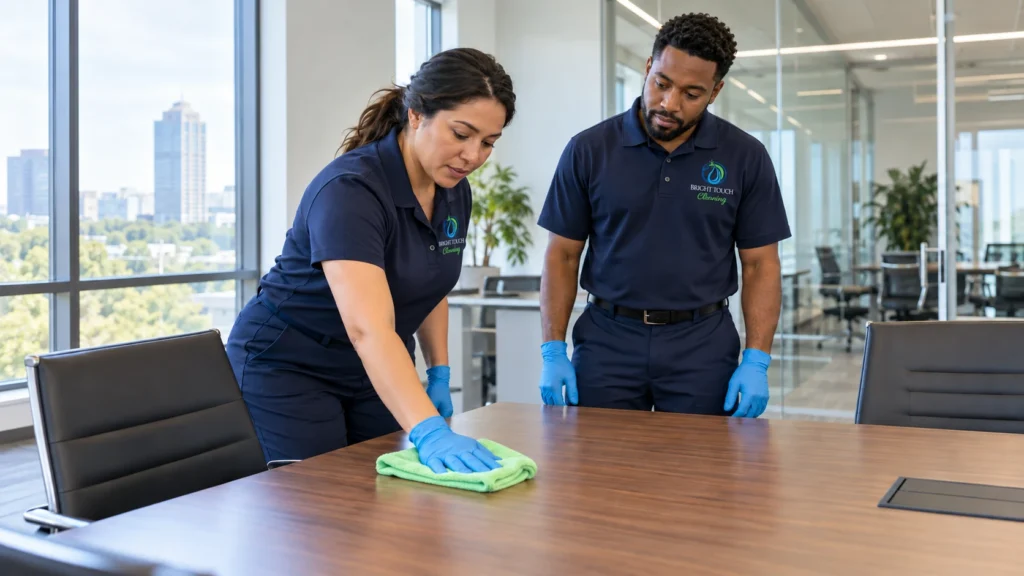

Two offices with the same square footage can receive very different cleaning estimates. One may need basic weekly upkeep, while another has high-traffic common areas, multiple restrooms, specialized flooring, or daily cleaning requirements that significantly increase the workload.
That’s why office cleaning cost in Marietta is rarely determined by size alone. Cleaning frequency, building layout, number of employees, service scope, facility type, accessibility, and requested add-ons can all influence the final price.
Even the condition of the workspace when service begins may affect the initial cleaning requirements.
Understanding how commercial cleaning companies typically evaluate these factors can make estimates easier to compare. Instead of focusing only on the lowest number, businesses can determine what is actually included and choose a cleaning plan that matches their workplace, schedule, and budget.
Office Cleaning Cost in Marietta: What Factors Affect Pricing?
What Really Drives Office Cleaning Cost in Marietta?
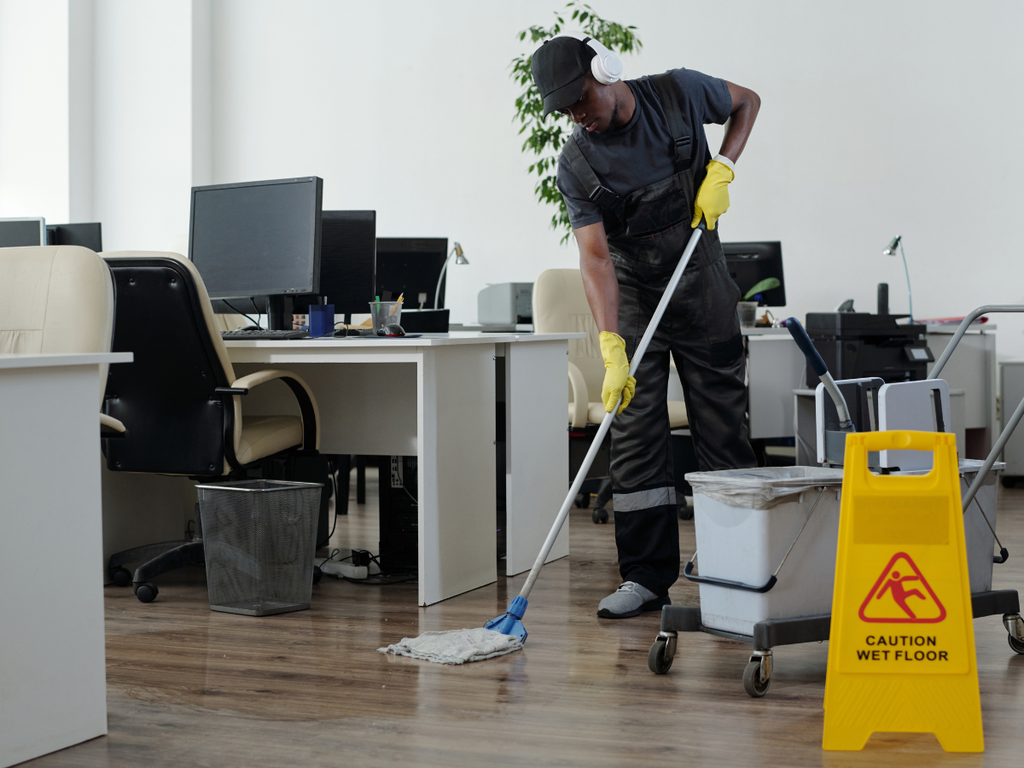
Office cleaning cost in Marietta is usually shaped by more than square footage alone. The size of the workplace matters, but cleaning frequency, the number of restrooms and shared spaces, floor types, occupancy levels, and the amount of detail required can all change how much labor a cleaning company needs to provide.
That is why two offices with similar square footage can receive different estimates. A lightly used professional suite with a small staff may need far less cleaning time than a busy office with multiple restrooms, break rooms, conference areas, and steady visitor traffic.
How Much Does Office Size Affect the Cleaning Estimate?
Square footage gives a cleaning company a useful starting point because larger facilities generally take longer to service. More floor area usually means additional vacuuming, mopping, dusting, trash removal, and time moving between rooms.
Layout matters too, however. An open office with relatively few enclosed rooms may be quicker to clean than a similarly sized facility divided into private offices, kitchens, restrooms, conference rooms, hallways, and reception areas.
For that reason, businesses comparing office cleaning cost in Marietta should avoid judging quotes solely by a price per square foot. The actual scope of work often provides a better explanation of the final number.
Which Areas Take More Time to Clean?
Not every part of an office requires the same amount of labor. Workstations and lightly used meeting rooms may need basic dusting, trash removal, and floor care, while restrooms and food-preparation areas generally involve more detailed cleaning and surface attention.
Areas that can increase the workload include:
- restrooms with multiple fixtures
- break rooms and office kitchens
- high-traffic entrances and lobbies
- conference rooms used throughout the day
- hard floors that require more than routine mopping
- heavily used shared work areas
- large amounts of trash or recycling
- interior glass and other detailed surfaces included in the scope
Routine commercial cleaning services may cover several of these areas, but the pricing impact depends on how often each space needs attention and what tasks are included. A restroom that requires daily cleaning affects labor differently from a conference room that only needs periodic attention.
How Does Cleaning Frequency Change the Cost?
Frequency affects both the total monthly price and the amount of work required during each visit.
An office cleaned several times per week may require more visits overall, but each visit can involve less accumulated dirt, trash, and restroom buildup than a workplace cleaned only occasionally.
The right schedule depends on how the facility is used. A quiet administrative office may not need the same frequency as a workplace with heavy employee traffic, customer visits, shared kitchens, or frequently used restrooms.
This is why frequency should be discussed alongside the scope rather than treated as a separate pricing question. A lower-cost schedule that leaves essential areas under-serviced may not provide good value, while paying for daily attention in spaces that stay relatively clean can also be unnecessary.
Do Specialized Cleaning Tasks Increase the Price?
They can. Routine office cleaning usually focuses on recurring tasks such as dusting, vacuuming, mopping, trash removal, surface cleaning, and restroom maintenance, while periodic or specialized work may require additional time, products, or equipment.
Examples can include detailed floor care, deeper cleaning of neglected areas, move-out work, or cleaning requirements associated with certain facility types.
These services should be identified separately from recurring janitorial work so businesses can see what is included in the regular rate and what may generate an additional charge.
Businesses should therefore check whether a quote covers only routine maintenance or also includes periodic services. A lower estimate can become less attractive if important tasks are excluded and later billed separately.
Why Does a Walkthrough Matter Before Pricing?
A walkthrough allows the cleaning company to see conditions that are difficult to judge from square footage alone.
The number of restrooms, flooring materials, current cleanliness, building access, traffic patterns, and the amount of furniture or equipment can all affect the labor required.
It also gives both sides a chance to define expectations before service begins. Questions about scheduling, facility size, recurring tasks, and service frequency can often be resolved during the estimating process, while common commercial cleaning questions may help businesses identify details they should clarify before comparing proposals.
A walkthrough can also prevent misunderstandings about which rooms are included, how often specific tasks will be completed, and which services cost extra. That makes the resulting quote more useful than a price based only on square footage or a brief description of the property.
What Should Businesses Compare Between Cleaning Quotes?
The lowest monthly number does not necessarily represent the lowest overall cost. Businesses should compare the actual scope, frequency, staffing expectations, included supplies, periodic services, and any exclusions before deciding which estimate offers better value.
Ask each provider to specify what will be cleaned during a normal visit, how often less frequent tasks will be completed, and what would trigger an additional charge. Comparing quotes on the same scope makes differences in office cleaning cost in Marietta much easier to understand and helps businesses avoid choosing a service based on price alone.
How Does Square Footage Shape Your Cleaning Budget?

Square footage is one of the clearest starting points for estimating office cleaning cost in Marietta, but it is not a complete pricing formula.
Larger offices generally require more labor because cleaners have more floors, workstations, hallways, restrooms, and shared areas to cover during each visit.
The relationship is not perfectly linear, however. A 10,000-square-foot open office may take less time to clean than a smaller facility packed with private rooms, restrooms, kitchens, partitions, and detailed surfaces, so businesses should treat square footage as the baseline rather than the final answer.
What Does Cleanable Square Footage Mean?
Cleaning estimates may focus on the portion of a facility that actually receives recurring service rather than every square foot shown on a lease or building plan.
Areas that are inaccessible, unused, or outside the agreed cleaning scope do not necessarily create the same labor demand as occupied offices and common areas.
That distinction can matter in buildings with storage rooms, mechanical spaces, vacant suites, or other areas that receive little or no routine attention.
When requesting a quote, businesses should clarify whether the provider is pricing the entire property or only the areas included in the cleaning plan.
Why Can Two Offices of the Same Size Cost Different Amounts?
Layout can change how efficiently a crew moves through a building. Large stretches of accessible flooring can often be serviced more efficiently than a fragmented layout with numerous doors, individual offices, stairways, furniture clusters, and small rooms requiring separate attention.
Occupancy changes the workload as well. A 5,000-square-foot office used by a small administrative team may produce less trash, restroom use, and surface cleaning than the same amount of space occupied by dozens of employees and regular visitors.
Flooring is another consideration because square footage does not tell you what covers that floor. Carpeted areas may require vacuuming and spot treatment, while hard surfaces may need mopping or other maintenance depending on their condition and the agreed service level.
Does a Larger Office Always Cost More Per Square Foot?
Not necessarily. Larger facilities can sometimes be cleaned more efficiently per square foot because crews can work through broad, repetitive areas without constantly changing tasks or moving between small rooms.
Smaller offices can still require substantial labor when they contain several restrooms, a kitchen, detailed reception areas, or high-touch surfaces that need frequent attention. This is one reason businesses should be cautious about applying a generic per-square-foot rate to every property.
The better comparison is the total cleaning scope relative to the space. Bright Touch works with different types and sizes of commercial facilities, which illustrates why the physical size of a workplace needs to be considered alongside how that space is divided and used.
How Should Businesses Estimate Their Cleanable Area?
Start with the total office area, then identify which spaces are actually included in routine service. Separate regular work areas from storage, vacant rooms, mechanical spaces, or other sections that may be excluded or cleaned less frequently.
It is also useful to group the remaining space by function:
- open office and workstation areas
- private offices
- conference and meeting rooms
- lobbies and reception areas
- kitchens and break rooms
- restrooms
- hallways and stairwells
- carpeted versus hard-surface flooring
This breakdown gives a cleaning provider more useful information than a single square-foot figure. It also makes it easier for a business to understand why one part of the facility may require more labor than another.
What Should You Ask About Square Footage in a Cleaning Quote?
Ask how the provider measured the space and whether the estimate is based on total or cleanable square footage.
The proposal should also make clear which rooms are included, which areas receive less frequent service, and whether specialized floor care or other periodic work is priced separately.
Businesses should also compare quotes using the same facility information. If one company is pricing 8,000 square feet of regularly cleaned space while another is pricing the full 10,000-square-foot building, the totals are not directly comparable.
Square footage remains an important part of office cleaning cost in Marietta because it helps establish the scale of the job. The most useful estimate, though, combines that measurement with the building’s layout, occupancy, floor surfaces, and actual cleaning scope so the price reflects the work that will really be performed.
Why Does Cleaning Frequency Change Your Total Price?
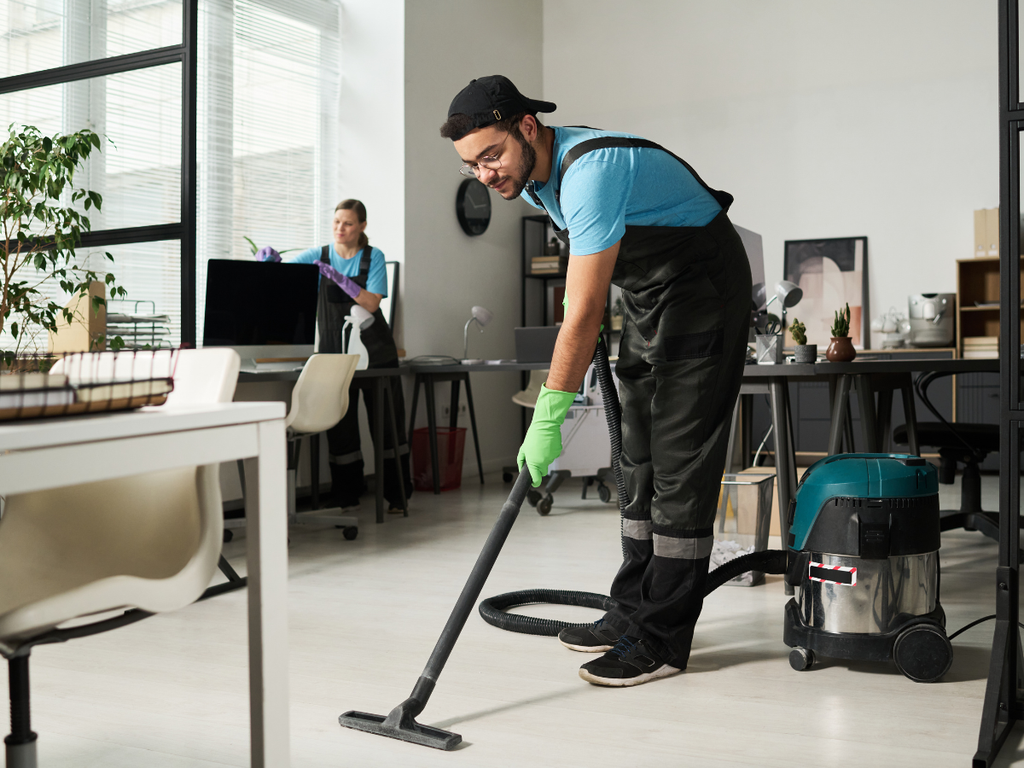
Cleaning frequency has a direct effect on office cleaning cost in Marietta because it changes both the number of visits per month and the amount of work required during each visit.
A business cleaned five nights a week will usually have a higher monthly total than one cleaned weekly, but the cost per visit may be lower because dirt, trash, and restroom buildup have less time to accumulate.
That distinction matters when comparing quotes. A lower-frequency schedule may reduce the number of monthly visits, but each visit can require more intensive work, particularly in busy offices where restrooms, break rooms, floors, and shared surfaces become noticeably dirtier between cleanings.
How Do Daily, Weekly, and Monthly Schedules Compare?
Daily or near-daily service is most common in workplaces with steady employee traffic, frequent visitors, heavily used restrooms, or shared kitchens that need consistent attention. Cleaning crews can focus on maintenance because they are returning before significant buildup develops.
Weekly service may work well for smaller offices with predictable occupancy and moderate use. The crew has more accumulated dust, trash, fingerprints, and floor debris to address than it would under a daily schedule, but the workload can still remain manageable if the facility is not heavily trafficked.
Monthly cleaning is different because it is closer to periodic maintenance than routine office cleaning for many workplaces.
Waiting several weeks between visits can mean more time spent on buildup, detailed dusting, restroom conditions, and floors, so businesses should not assume that cutting the number of visits will reduce costs in direct proportion.
Does More Frequent Cleaning Lower the Cost Per Visit?
It can, although businesses should not assume that every provider prices this way. Recurring visits can be more efficient because cleaners become familiar with the layout, access procedures, task sequence, and areas that consistently need the most attention.
Regular maintenance also prevents some tasks from becoming more labor-intensive. A restroom serviced several times per week, for example, may require less corrective cleaning during each visit than one left for an extended period.
The monthly bill still reflects the increased number of visits, so a more frequent schedule usually costs more overall. The value lies in maintaining the facility at a consistent level rather than repeatedly allowing conditions to decline and then paying for heavier cleaning.
Do All Office Areas Need the Same Cleaning Frequency?
No. One of the best ways to control office cleaning cost in Marietta is to avoid treating every room as if it needs identical attention.
A practical schedule might assign different frequencies to different tasks:
| Area or Task | Possible Frequency |
| Restrooms | Daily or several times per week |
| Trash removal | Daily or based on occupancy |
| Break rooms | Daily or several times per week |
| Open office floors | Several times per week |
| Private offices | Weekly or as needed |
| Conference rooms | Based on use |
| Detailed dusting | Weekly or periodically |
| Interior glass | Periodically or as needed |
The appropriate schedule depends on occupancy, business hours, visitor traffic, and how quickly each area becomes dirty. Separating high-use areas from low-use spaces can produce a more efficient cleaning plan than applying one blanket frequency across the entire office.
What Happens if You Reduce Cleaning Frequency?
Reducing frequency can lower monthly spending, but only if the facility can tolerate the longer gap between visits.
Businesses may need employees to handle more trash, spills, restroom issues, or light cleaning between professional visits, which shifts part of the workload rather than eliminating it.
Longer intervals can also change what cleaners encounter when they return. More accumulated debris, heavier restroom use, and visible floor buildup may require additional time, which can limit the savings expected from reducing the schedule.
Before cutting visits, identify which tasks are currently keeping the workplace functional from day to day. It may be more effective to reduce low-priority tasks while keeping restrooms, trash removal, kitchens, and high-traffic areas on a more frequent schedule.
What Happens When Cleaning Frequency Changes Mid-Contract?
A change in frequency usually requires the scope and pricing to be reviewed together. Moving from three visits per week to one changes not only the number of scheduled visits but also the likely condition of the facility when the crew arrives.
The reverse is true as well. Adding service days may require additional staffing, different scheduling, or changes to the tasks completed on each visit.
Businesses should ask whether a contract allows frequency changes, how much notice is required, and whether pricing will be recalculated.
Those details are especially useful for companies with seasonal staffing, changing office attendance, or periods of unusually high activity.
How Do You Choose the Most Cost-Effective Cleaning Schedule?
Start with actual building use rather than selecting a schedule based solely on price. Look at employee headcount, visitor volume, restroom use, kitchen activity, flooring, operating hours, and which areas visibly decline first between cleanings.
Then separate essential recurring tasks from work that can be done less often. A schedule built around actual use usually gives a clearer picture of office cleaning cost in Marietta than simply choosing daily, weekly, or monthly service as a single package.
The most cost-effective plan is not necessarily the one with the fewest visits. It is the one that keeps high-use areas at an acceptable standard without paying for unnecessary attention in spaces that remain relatively clean.
What Services Are Included in a Standard Office Clean?

A standard office cleaning package usually covers the recurring tasks needed to keep work areas, restrooms, break rooms, and shared spaces presentable between visits.
The exact scope varies by provider and facility, which is why businesses comparing office cleaning cost in Marietta should look closely at what is actually included rather than relying on the service name alone.
Routine office cleaning generally focuses on maintenance, not restoration. If a facility needs neglected floors corrected, extensive interior glass cleaned, or unusually heavy buildup removed, those tasks may fall outside the standard recurring scope and affect the final price.
What Tasks Are Usually Included in Routine Office Cleaning?
Most recurring office cleaning plans include a combination of surface cleaning, floor care, trash removal, and restroom maintenance. The frequency of each task may differ depending on how the office is used, so not every item is necessarily completed during every visit.
Common routine tasks may include:
- dusting accessible horizontal surfaces
- spot cleaning doors, walls, switches, and other visibly marked areas
- vacuuming carpeted floors and edges
- mopping hard-surface flooring
- emptying trash and replacing liners
- cleaning restroom fixtures, mirrors, counters, and partitions
- restocking dispensers when supplies are provided
- wiping break-room tables, counters, and appliances
- cleaning common areas, entrances, and hallways
Even within those categories, the scope can vary. One proposal may include detailed edge vacuuming and break-room appliances, while another may treat those items as periodic tasks, so businesses should compare written scopes rather than assuming all standard packages are equivalent.
Which Services Are Usually Considered Extra?
Specialized work typically requires more time, different equipment, or a separate schedule. That may include stripping and waxing hard floors, machine scrubbing, deep carpet care, intensive disinfecting, interior glass cleaning, day porter coverage, or one-time restorative cleaning.
These services can increase office cleaning cost in Marietta because they add labor beyond the normal maintenance cycle. They may also be scheduled monthly, quarterly, seasonally, or only when conditions require them rather than being included with every visit.
For example, routine mopping maintains a hard floor, while stripping, waxing, or machine scrubbing addresses a different level of floor care. Businesses should confirm whether those services are built into the agreement or quoted separately before comparing monthly prices.
What Should Be Listed in the Cleaning Scope?
A useful cleaning proposal should identify both the areas being serviced and the tasks assigned to them. It should also make clear how often less frequent work is performed, because a task listed as “included” may mean daily in one contract and quarterly in another.
Look for details covering:
- rooms and areas included in service
- tasks completed during each visit
- periodic tasks and their frequency
- supply and restocking responsibilities
- floor-care requirements
- exclusions and optional services
- after-hours or daytime scheduling
- procedures for additional or one-time work
This level of detail makes quote comparisons far more meaningful. A lower monthly price may simply reflect fewer included tasks, less frequent service, or additional charges for work another provider includes in its standard scope.
How Can You Avoid Paying for Services You Do Not Need?
Start by separating essential recurring tasks from occasional work. Restrooms, trash, floors, break rooms, and shared surfaces may need frequent attention, while detailed floor treatment, interior glass, or deep cleaning can often follow a separate schedule based on actual condition.
It also helps to review the cleaning scope after the service has been in place for a while. If certain tasks are being performed more often than necessary while other areas consistently need extra attention, adjusting the schedule can produce a better balance between cleanliness and office cleaning cost in Marietta.
The goal is not to purchase the largest possible package. It is to define a routine that covers the areas employees and visitors actually use, then price specialized work separately when the facility genuinely needs it.
How Can You Get an Accurate Estimate for Your Marietta Office?

An accurate cleaning estimate starts with a clear description of how the office is used, not just its square footage. The more specific the information provided at the beginning, the easier it is for a cleaning company to build a scope that reflects the actual workload rather than relying on broad assumptions.
For businesses comparing office cleaning cost in Marietta, that means defining the space, schedule, occupancy, and service expectations before comparing prices. Two quotes can look very different simply because one includes tasks or areas that the other leaves out.
What Information Should You Provide for a Cleaning Quote?
Start with the basic details that affect labor and scheduling. Approximate square footage is useful, but it should be paired with information about how many people use the facility, how many days per week cleaning is needed, and whether service must happen during or after business hours.
It also helps to identify:
- number of offices, restrooms, and break rooms
- high-traffic entrances or customer-facing spaces
- carpeted versus hard-surface flooring
- current condition of the facility
- preferred cleaning frequency
- any periodic floor care or detailed cleaning needs
- areas that should be excluded from routine service
- access restrictions, security procedures, or scheduling limits
Businesses can provide these details through a commercial cleaning estimate request before a more detailed scope is finalized. Giving accurate information early reduces the chance that the original estimate will need substantial changes later.
Why Is an On-Site Walkthrough Useful?
A walkthrough lets the provider see conditions that are difficult to describe over the phone or through a form. Furniture density, flooring transitions, restroom usage, access points, clutter, and the distance between work areas can all affect how efficiently a crew can move through the building.
It also gives the business a chance to point out priorities and clarify expectations before pricing is finalized. If certain rooms need daily attention while others only require weekly service, that distinction should be reflected in the proposal.
What Should You Compare Between Estimates?
Do not compare the monthly totals until you know the quotes are based on the same work. One provider may include supplies, periodic floor care, or additional common areas while another may price those separately.
The proposal should clearly identify:
- areas included in service
- tasks performed during each visit
- service frequency
- periodic or specialty work
- supply responsibilities
- scheduling requirements
- exclusions
- conditions that may trigger additional charges
This makes office cleaning cost in Marietta easier to compare on an equal basis. A slightly higher estimate may represent a broader scope, while a lower number may simply exclude tasks the facility still needs.
The goal is to obtain a quote that reflects how the office actually operates. Accurate facility information and a clearly defined scope make the final price more useful than a generic estimate based on square footage alone.
Conclusion
Office cleaning costs can vary considerably from one Marietta workplace to another, which is why square footage alone rarely tells the whole story.
Cleaning frequency, building layout, workplace activity, requested services, and the condition of the space can all influence the final price. Understanding these factors makes it easier to compare proposals and choose a cleaning plan that fits both your workplace and budget.
For dependable commercial cleaning tailored to your facility, choose Bright Touch Maids & Janitorial Services. Call (770) 977-9096 to discuss your office cleaning needs and get an estimate today.
Looking for cleaning help at home, too? Explore the questions to ask a house cleaning service before booking.